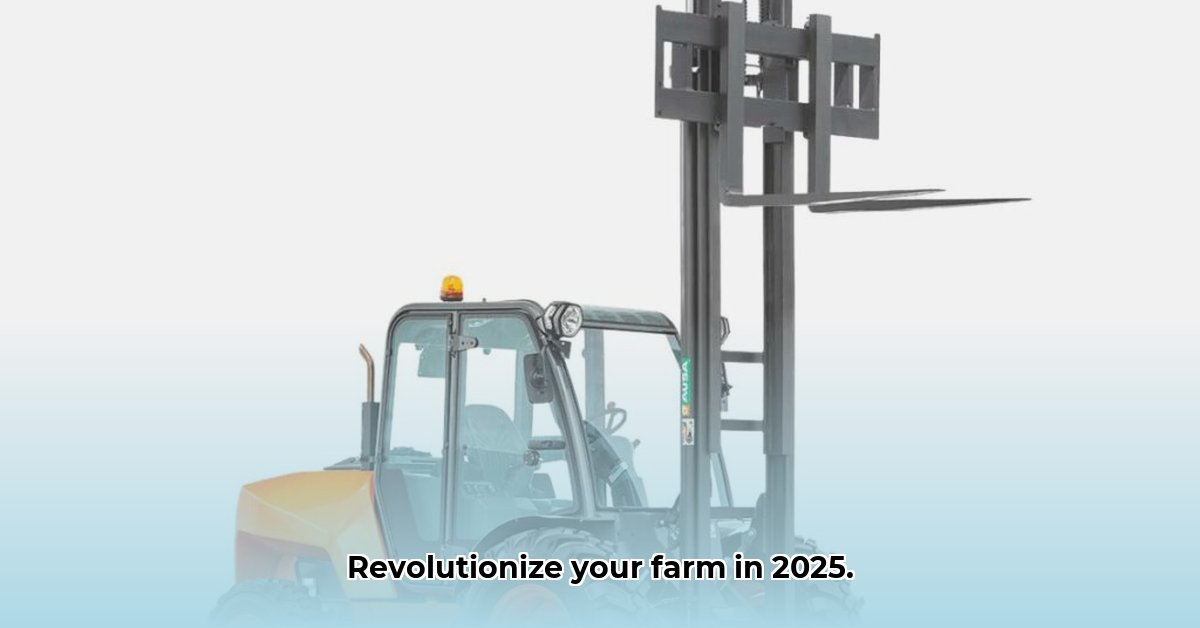
Forklift Tractor Attachments: Revolutionizing Farm Productivity
Tired of backbreaking labor moving heavy loads? Tractor forklift attachments are transforming agricultural efficiency, saving farmers time, money, and physical strain. These versatile tools turn your tractor into a powerful material-handling machine, effortlessly lifting and shifting bales, pallets, and more. This comprehensive guide equips you with the knowledge to select, install, and maintain these game-changing attachments, maximizing your farm's productivity. For more options, check out these compact tractor attachments.
Types of Tractor Forklift Attachments
The market offers a variety of forklift tractor attachments, each designed for specific tasks and load capacities. Understanding these differences is key to selecting the optimal tool for your farm.
Standard Forks: The workhorse of the industry, ideal for moving pallets and uniformly sized loads. Their simplicity and reliability make them a popular choice for everyday tasks.
Rotating Forks: Perfect for navigating tight spaces. These forks allow you to rotate pallets 90 degrees, simplifying placement in confined areas like barns or storage sheds. This precision increases efficiency in demanding environments.
Side-Shifting Forks: Enhance precision and control. The side-shift function allows for precise lateral movement of loads, ideal for neat and efficient stacking and arrangement.
Heavy-Duty Forks: Built to handle exceptionally heavy loads, such as large bales of hay or heavy equipment. Investing in these is crucial for farms dealing with substantial weight.
Specialized Attachments: Beyond the basics, specialized attachments cater to unique needs. Bale spears efficiently handle round bales, pallet grabs improve pallet handling, and various other attachments exist for diverse tasks. (Consider your unique farm needs when choosing.)
Compatibility and Integration: Ensuring Seamless Operation
Proper integration is critical. Mismatching an attachment to your tractor's hydraulic system can lead to poor performance or equipment damage. Always verify the attachment's hydraulic requirements (flow rate and pressure) against your tractor's specifications, usually found in your tractor's owner's manual. Incorrect matching could damage the system. (Consult your tractor's manual and/or your dealer for guidance.)
Selection Criteria: Choosing the Right Attachment for Your Farm
Selecting the right attachment involves careful consideration of several key factors. This section acts as your buyer's guide, ensuring an informed decision.
| Factor | Considerations |
|---|---|
| Lifting Capacity | Determine the heaviest loads you'll handle (bale weights, pallet dimensions). Select an attachment with a higher capacity for a safety margin. |
| Hydraulic Requirements | Match the attachment's hydraulic demands (flow rate, pressure) to your tractor's capabilities. Underpowered systems lead to inefficiency and potential damage. |
| Tractor Compatibility | Ensure compatibility with your specific tractor make and model. Check manufacturer specifications to prevent installation issues. |
| Safety Features | Prioritize overload protection and emergency stops for safe operation. These features are essential for preventing accidents. |
| Budget | Attachments vary significantly in price. Set a realistic budget for cost-effective decision-making. |
Installation and Operation: A Step-by-Step Guide
Safe installation and operation are paramount. Always consult both your tractor's and the attachment's manuals.
Step 1: Preparation: Review instructions thoroughly; it’s better to have extra help.
Step 2: Secure Connections: Connect the attachment to your tractor's hydraulic system, ensuring all couplings are secure and leak-free. A faulty connection could lead to accidents.
Step 3: Test Run: Begin with lighter loads to familiarize yourself with the controls. This is crucial for safe operation.
Step 4: Gradual Weight Increase: Gradually increase the weight, ensuring smooth performance before tackling heavier loads.
Step 5: Safety First! Always adhere to safety protocols outlined in your manuals.
Maintenance and Troubleshooting: Maximizing Lifespan and Performance
Regular maintenance is crucial for longevity and performance.
Hydraulic Fluid Checks: Regularly check fluid levels and condition. Low or contaminated fluid can damage the system.
Lubrication: Lubricate moving parts to prevent wear and tear. Regular lubrication is essential for equipment longevity.
Regular Inspections: Inspect for damage, loose connections, or leaks. Addressing minor issues early prevents major problems.
Conclusion: Boosting Farm Productivity Through Efficient Material Handling
Investing in forklift tractor attachments translates to significant long-term benefits. While there's an initial cost, the labor, time, and fuel savings significantly outweigh the expense. Increased efficiency directly boosts profitability. Remember, prioritizing safety through proper training and regular maintenance is critical for long-term success and a safe working environment. Don't compromise on safety.